
Modrest
Project: Modular Comfort System for Adaptive Rest & PostureDesign sprint
Category: Personal project, design sprint, non- medical domain
Role: Human-centered design & ergonomics, industrial design & form development, prototyping & verification,
Keywords: Human-Centered Design | Everyday Ergonomics | Adaptive Comfort | User Wellbeing | Personalized Support | Intuitive Use | Rest Experience
This project began with a simple observation someone close to me struggling to find a comfortable resting position despite trying multiple pillows, cushions, and arrangements.
The issue wasn’t the lack of products, but the lack of adaptability. Each solution worked temporarily, but none could adjust to changing postures over time.
What started as a personal attempt to improve one individual’s comfort evolved into a broader exploration of how rest systems can adapt to the human body rather than forcing the body to adapt to them.
Design intent
To design a modular comfort system that allows users to intuitively build and adjust their resting posture, supporting the neck, back, and body in a more natural and adaptive way.
Design principles
-
Adaptability over fixed form
-
Intuitive arrangement (no instructions needed)
-
Ergonomic support for neck & spine
-
Soft structure with controlled stability
-
Personalization through modularity
Synchronic observation
Existing solutions are largely designed for generalized comfort, offering limited support for the recurring postural discomfort experienced in everyday use.
_jfif.jpg)
_jfif.jpg)
_jfif.jpg)
_jfif.jpg)


_jfif.jpg)
Behavior vs expression (user insights)
Users are constantly adapting their setup because the setup itself cannot adapt to them.
User Expression
“I keep adjusting things every few minutes… I don’t stay in one position for long.”
“It feels fine for a bit, then it doesn’t.”
“I start with one… then keep adding more.”
“I try different combinations until something works… nothing works permanently.”
“If my neck is fine, my back starts hurting.”
“I adjust without even realizing it.”
“I don’t know what the right position is… I wish I could lock one.”
Observed Behavior
Frequent adjustments & shifting positions
Comfort is short-lived
Uses multiple pillows to build support
Creates temporary setups through trial-and-error
Discomfort shifts between neck and back
Adjustments happen subconsciously
No clear sense of an ideal posture
Observed Behavior
Frequent adjustments & shifting positions
Comfort is short-lived
Uses multiple pillows to build support
Creates temporary setups through trial-and-error
Discomfort shifts between neck and back
Adjustments happen subconsciously
No clear sense of an ideal posture
Concept explanation
Instead of designing a single “perfect” form, the solution breaks comfort into "adjustable" modules that can be fold, stacked, or reoriented depending on the user’s posture and need.
Ergonomic thinking
The system was designed to better align with natural body contours, particularly focusing on neck elevation, lumbar support, and gradual transitions between support angles.
Ideation & prototyping

The final concept proposes a standard mattress cover divided into multiple partitions, each filled with a desired materials to provide adaptable support and enhanced comfort during rest.

The partitioned design allows the mattress to fold and collapse, making it easier to store and manage in everyday use.
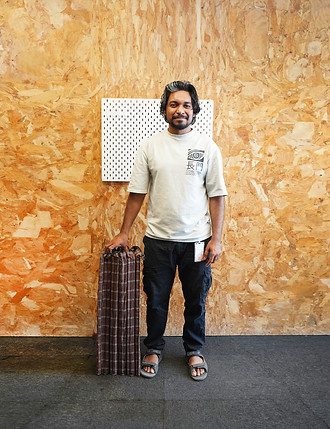

High density memory foam
Users can choose materials based on their individual comfort preferences.
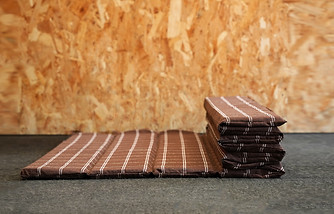

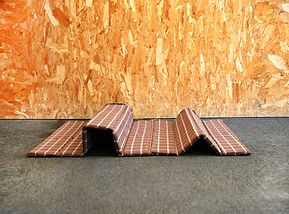
The modular design allows the mattress to be reconfigured based on functional and ergonomic needs.



The system allows users to shape the mattress according to their comfort needs, with focused support for the neck and lumbar areas.


The system is intuitively used by the individual to support neck comfort.
The outcome
The final outcome is a flexible system that allows users to create their own comfort rather than relying on predefined forms, making rest more intuitive, personal, and adaptable.
What began as a solution for one person revealed a broader insight—comfort is not a fixed product, but a system that should evolve with the user.